

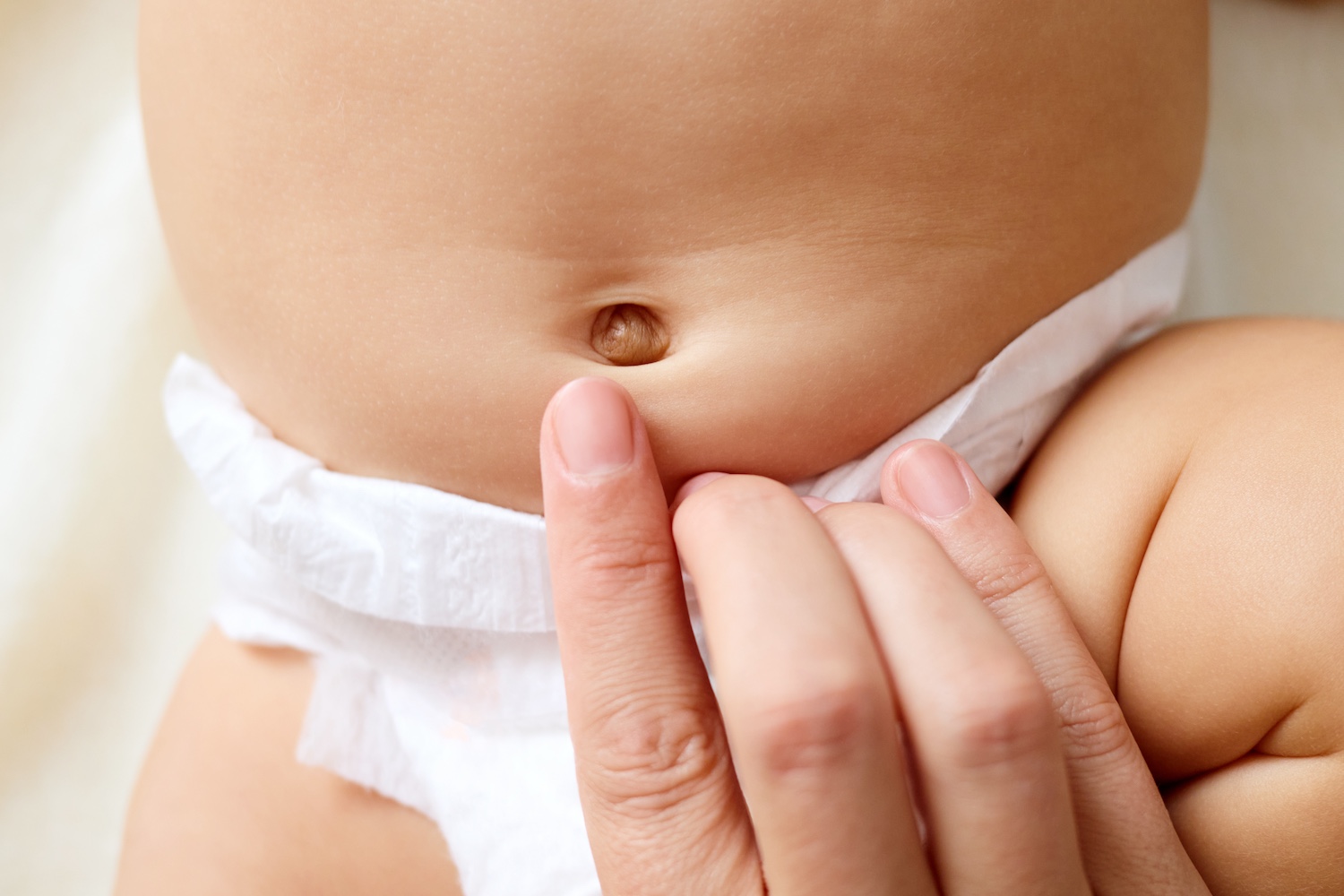
Looking after your newborn’s belly button can feel more stressful than expected. Parents often ask how to clean the umbilical cord stump, when it should fall off, whether discharge is normal, and what to do if they notice a lump.
The reassuring news is that most umbilical stump and belly button concerns are minor and resolve naturally. Here is what you need to know about newborn belly button care.
What Is the Umbilical Cord Stump?
After birth, the umbilical cord is clamped and cut, leaving a small stump attached to your baby’s belly button. This is called the umbilical cord stump.
Over the first few days, the umbilical stump gradually dries out, darkens to brown or black, shrivels and eventually falls off on its own. This is a normal part of the healing process.
When Does the Umbilical Stump Fall Off?
In most babies, the umbilical stump falls off between 7 and 14 days. Occasionally, it can take up to 3 weeks and still be considered normal.
After it falls off, you might notice some oozing around your baby’s belly button. This may be clear, sticky or brownish, and it might leave a mark on your baby’s clothes or nappy. It may also have a mild smell. This is part of the normal healing process.
If the umbilical stump has not fallen off by 3 weeks, you should speak to your doctor, as rarely this can be associated with delayed healing or underlying immune issues.
How to Clean the Umbilical Stump and Belly Button
Current guidelines in Australia and in most high-income countries recommend dry cord care. This means keeping the umbilical stump clean and dry while it heals, without using antiseptics, alcohol, creams, or powders.
Wash your hands before touching the stump and clean it gently with plain water if needed. You do not need soap, creams, or antiseptic ointments to keep it clean. After bathing, gently pat the stump dry with a towel or soft cloth and make sure it is completely dry.
Fold the nappy down so it does not cover the stump. Allowing air to circulate helps it dry properly and reduces irritation from urine or stool. If the stump gets wee or poo on it, rinse it off with clean water, or mild soap if needed, and make sure it is completely dry.
Do not pull on the stump, it will fall off naturally.
Umbilical Stump Infection (Omphalitis)
Omphalitis is a bacterial infection of the umbilical stump and surrounding skin. It is uncommon, but it can become serious if not treated promptly and usually requires urgent treatment with intravenous antibiotics.
Warning signs include redness and warmth around the belly button, tenderness to touch, swelling, pus, a foul smell, fever, poor feeding, lethargy, or your baby appearing generally unwell.
If you notice any of these signs, seek medical advice urgently.
Umbilical Granuloma in Babies
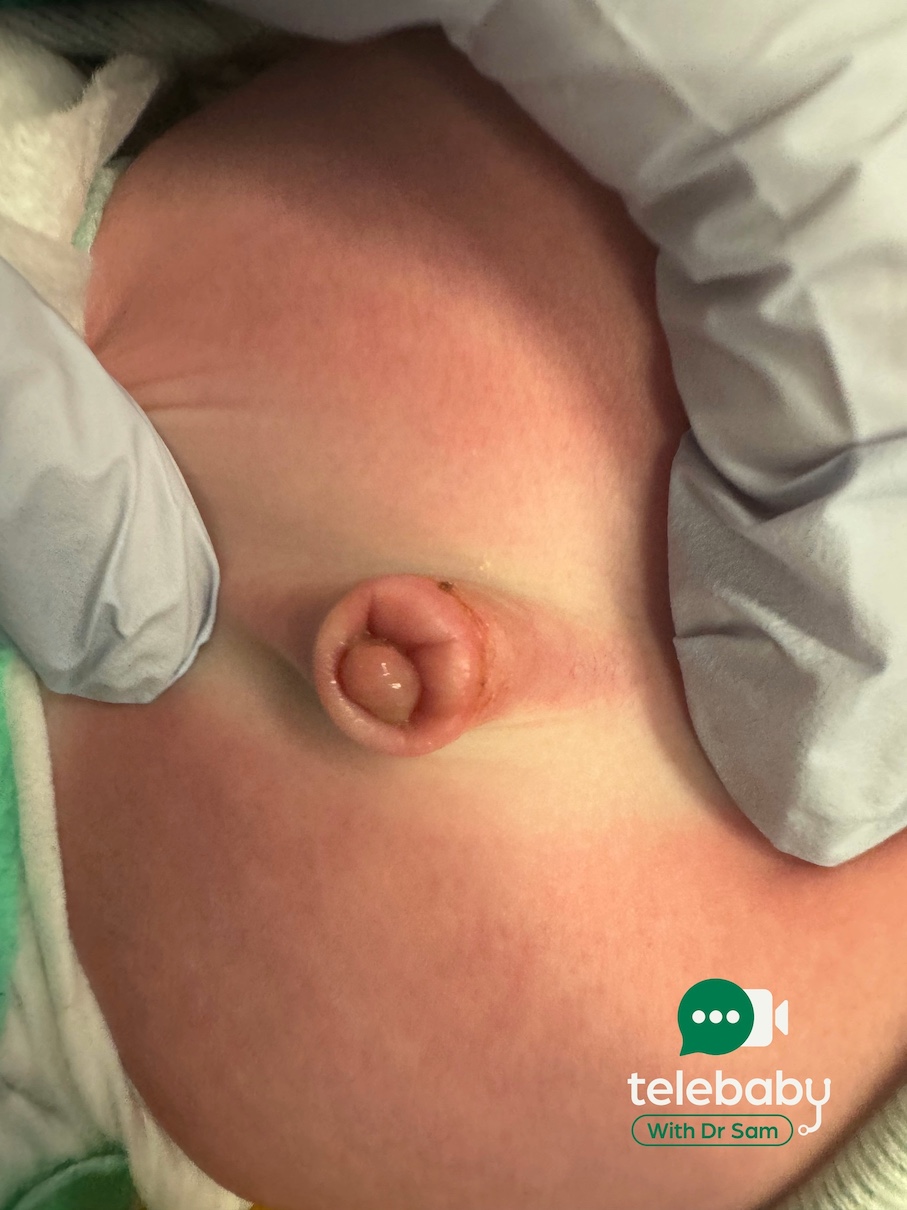
Sometimes after the umbilical stump falls off, a small pink or red lump remains inside the belly button. This is called an umbilical granuloma. It is an overgrowth of healing tissue that has not completely dried.
The lump is usually soft, moist and not painful. Occasionally it may ooze a small amount of clear or yellow fluid, which can make the area look wet.
An umbilical granuloma is not dangerous, but it often needs simple treatment to help it dry up completely.
Umbilical Granuloma Treatment
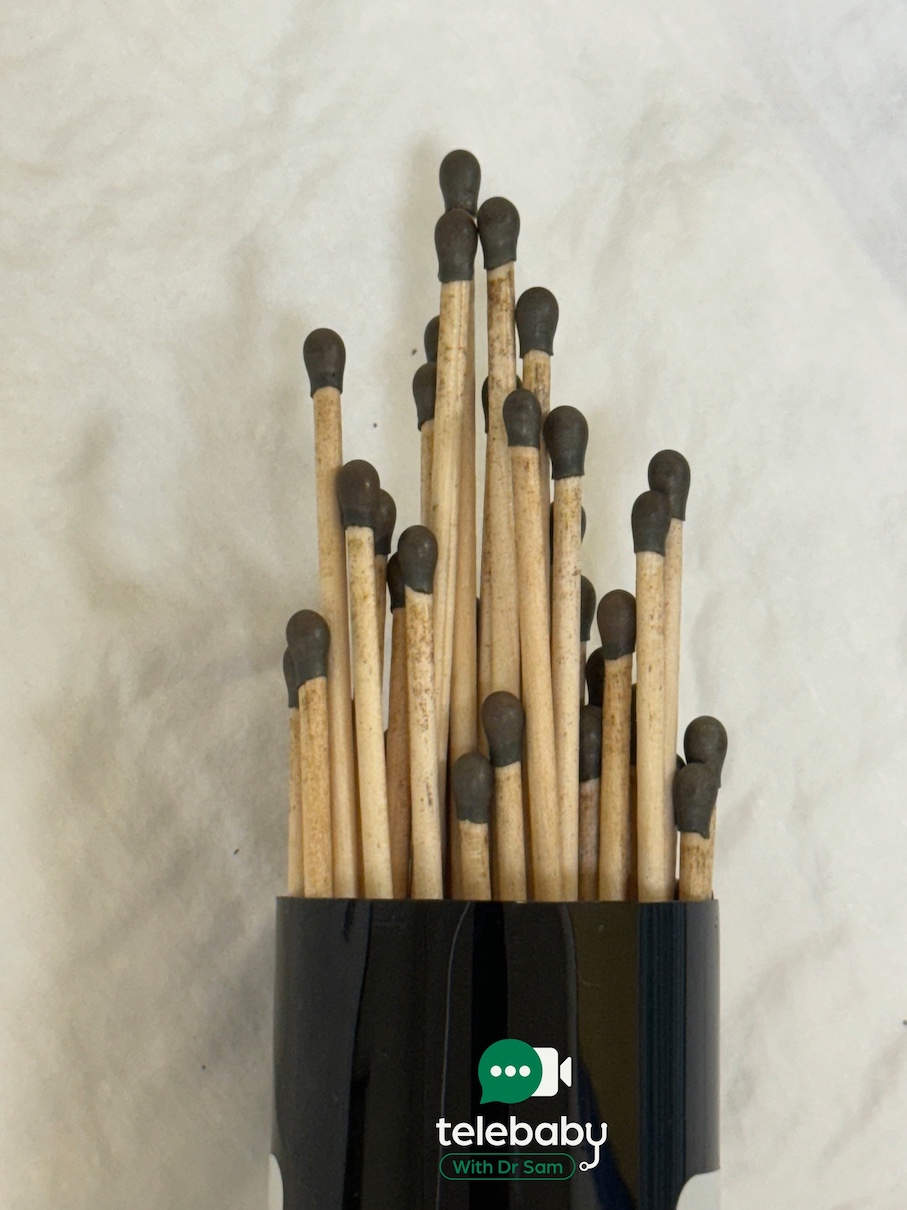
In most cases, simple table salt can help dry the extra tissue and allow the area to heal.
To apply salt treatment:
- Clean the area with warm water and make sure the belly button is clean. Pat it completely dry.
- Place a small pinch of table salt directly onto the granuloma.
- Cover the area with a clean gauze dressing and secure it gently with adhesive tape.
- Leave it in place for about 30 minutes.
- Remove the gauze.
- Clean the belly button again using warm water and mild soap, ensuring all of the salt is removed.
- Pat the area completely dry.
Repeat these steps twice daily for 3 to 5 days. Most granulomas begin to shrink within a few days and gradually become smaller, drier, and darker in colour.
If there is no improvement after 5 days, or if the surrounding skin becomes red or irritated, seek medical advice to ensure it is not another condition.
If salt treatment does not work, a doctor can apply silver nitrate in the clinic. This is quick, usually not painful, and may require one or two treatments.
Umbilical Hernia in Babies
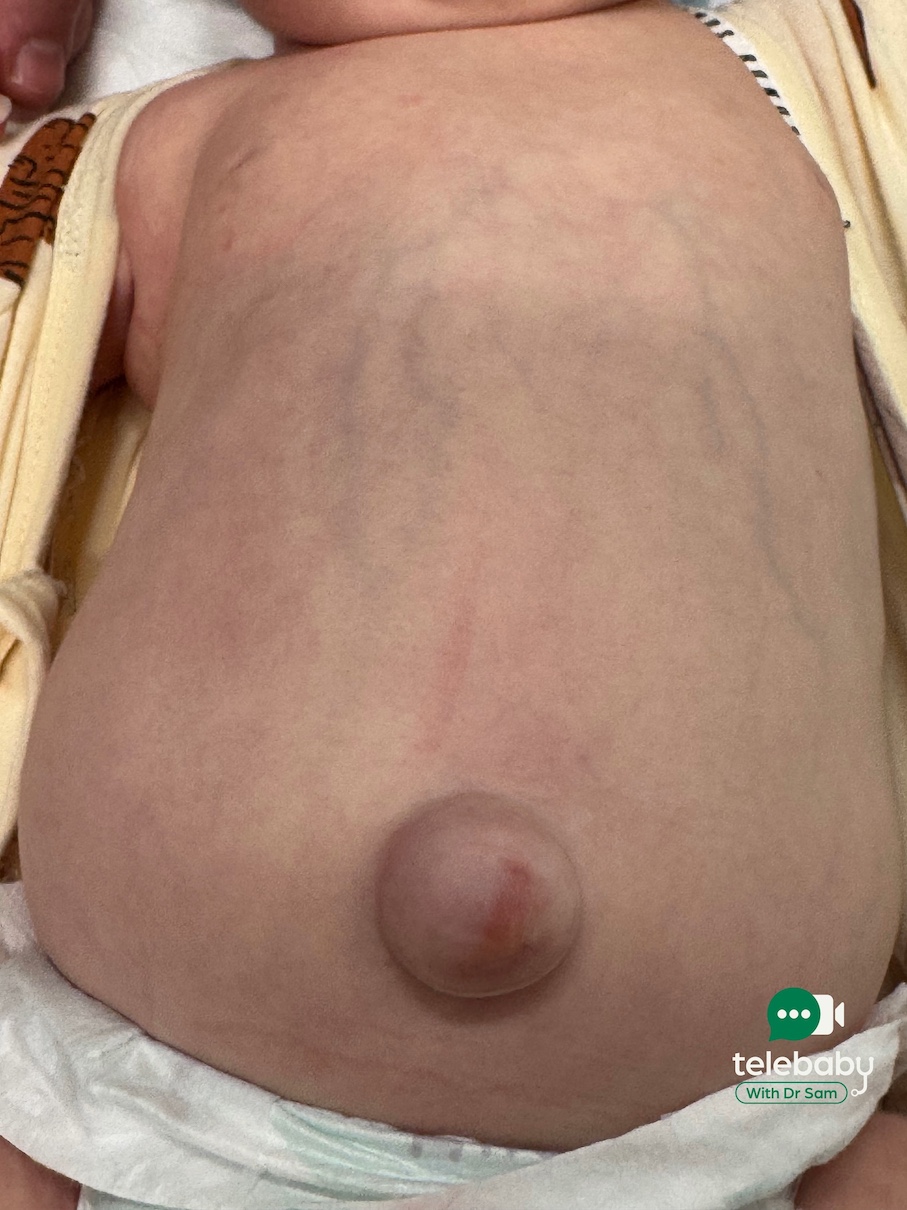
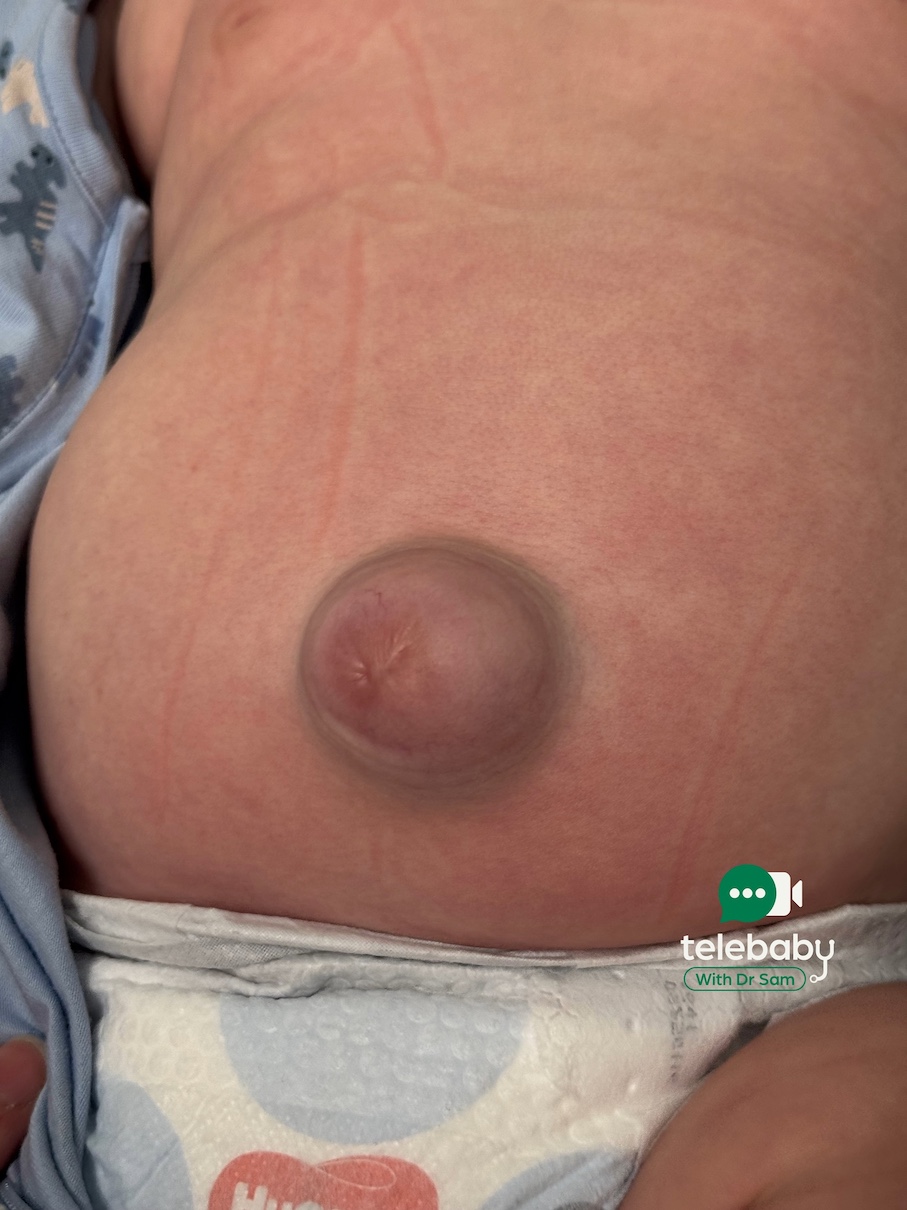
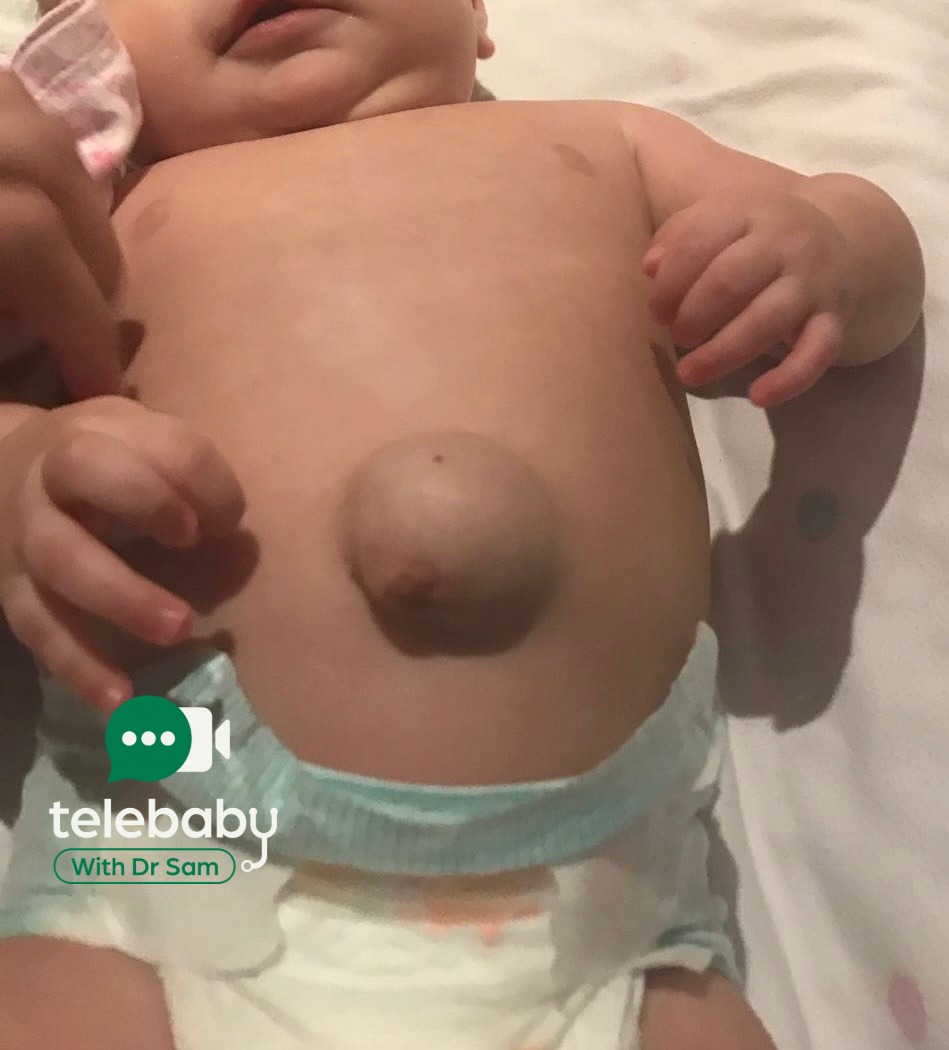
An umbilical hernia appears as a soft bulge at the belly button, especially when your baby cries, coughs, or strains. It occurs when the abdominal wall muscles have not fully closed after birth. This allows a small portion of intestine or fatty tissue inside the abdomen to push through the opening, creating the visible bulge.
Umbilical hernias are more common in premature babies and in babies with low birth weight. The bulge often comes and goes. It may be more noticeable when your baby is crying or straining and may flatten or disappear when they are calm or lying down.
Many close on their own by age 2, and most by age 4 to 5.
Surgery may be considered if the hernia has not closed by around age 5, is very large, becomes trapped, causes pain, or shows signs of complications such as swelling, redness, or tenderness.
If the hernia becomes hard, painful, swollen, or discoloured, seek urgent medical care.
Taping coins or objects over the belly button does not help and can irritate the skin.
When Should You See a Doctor?
Seek medical advice if:
• The umbilical stump has not fallen off after 3 weeks
• The area around the stump is red, warm, or tender to touch
• There is a bad or foul smell coming from the belly button
• There is ongoing discharge or persistent bleeding
• The granuloma does not improve with treatment
• The hernia has not resolved by around age 5
• The hernia becomes hard, painful, swollen, or discoloured
• Your baby develops a fever
• Your baby is feeding poorly, unusually sleepy, or seems unwell
If you are unsure, it is always better to have your baby assessed by a child and family health nurse, GP, or paediatrician.
Frequently Asked Questions
Should I use alcohol to clean the umbilical cord?
No. Plain water and keeping the area clean and dry is recommended. Alcohol and antiseptics can delay healing. These recommendations are followed in Australia and in many other high-income countries.
Can I bathe my baby before the cord falls off?
Yes. Short baths are fine. Dry the area carefully afterwards.
Is it normal for the belly button to smell?
A mild smell can occur as the stump dries. A strong smell with redness or discharge may indicate infection and should be reviewed.
Is it normal for the granuloma to ooze?
Yes. A small amount of clear or yellow fluid can be normal. Redness, pus, swelling, or increasing tenderness is not and should be reviewed.
What treatment options are available for an umbilical granuloma?
In most cases, simple table salt can be used at home to help dry the granuloma. Step-by-step instructions for the salt method are outlined above.
If salt treatment is not effective, a doctor can treat the granuloma with silver nitrate in clinic. Silver nitrate gently cauterises the extra tissue, so it dries and heals. The procedure is quick, usually not painful, and may need to be repeated once or twice.
If the area becomes red, irritated, or does not improve, seek medical advice to ensure it is not another condition.
Does my baby need surgery for an umbilical hernia?
In most cases, babies do not need surgery for an umbilical hernia. Many close on their own by age 2, and most by age 4 to 5.
Surgery may be considered if the hernia has not closed by around age 5, is very large, becomes trapped, causes pain, or shows signs of complications such as swelling, redness, or tenderness.
If you are unsure, your doctor can examine the hernia and advise whether monitoring or referral to a surgeon is appropriate.
Can an umbilical hernia burst?
No. Umbilical hernias do not burst.
Does taping a coin over the belly button help?
No. This does not help and can irritate the skin.
Written by Dr Sam
If you have any concerns about your baby’s umbilical stump, granuloma, or hernia, book a consultation with Dr Sam for expert, evidence-based advice and peace of mind.
Click HERE to book a consultation with Dr Sam.