


By Dr Samuel Heitner, Consultant Paediatrician and Founder of Telebaby
Seeing blood in your baby’s nappy can be worrying. You may wonder whether something you have eaten, your baby’s formula or another health issue could be responsible.
One possible cause I commonly see is food protein-induced allergic proctocolitis (FPIAP). This is a delayed food allergy that can cause blood and sometimes mucus in the poo, even when a baby otherwise seems perfectly well.
However, blood in your baby’s poo does not automatically mean an allergy. There are several possible causes, and it is important to have your baby assessed before changing their formula or removing foods from your diet.
What is FPIAP?
FPIAP is a type of delayed food allergy that causes inflammation in the lower part of the bowel.
Unlike an immediate food allergy, FPIAP does not cause hives, facial swelling or breathing difficulties. Instead, it mainly affects the digestive system.
Symptoms usually begin during the first few months of life, often within the first few weeks.
Because this is a delayed allergy, symptoms can take hours to days to appear after exposure to the trigger food protein. This can make it difficult to identify the cause, particularly in breastfed babies.
The most common triggers are cow’s milk protein and soy, although other foods, including egg, wheat and rice, can occasionally be responsible.
FPIAP can occur in both breastfed and formula-fed babies. Most affected babies are otherwise well, feeding normally and gaining weight.
For more information about the different types of milk allergy, read my article Milk Allergy in Babies: What Every Parent Should Know.
What does blood or mucus in a baby’s poo look like?
You may notice small red flecks or streaks of blood, sometimes mixed with mucus. Your baby’s poo may look otherwise normal or be looser than usual.
The amount of blood and mucus can vary from one nappy to another.
Taking a photograph of the nappy can be helpful when discussing your concerns with your doctor. However, the appearance of the poo alone cannot confirm an allergy.


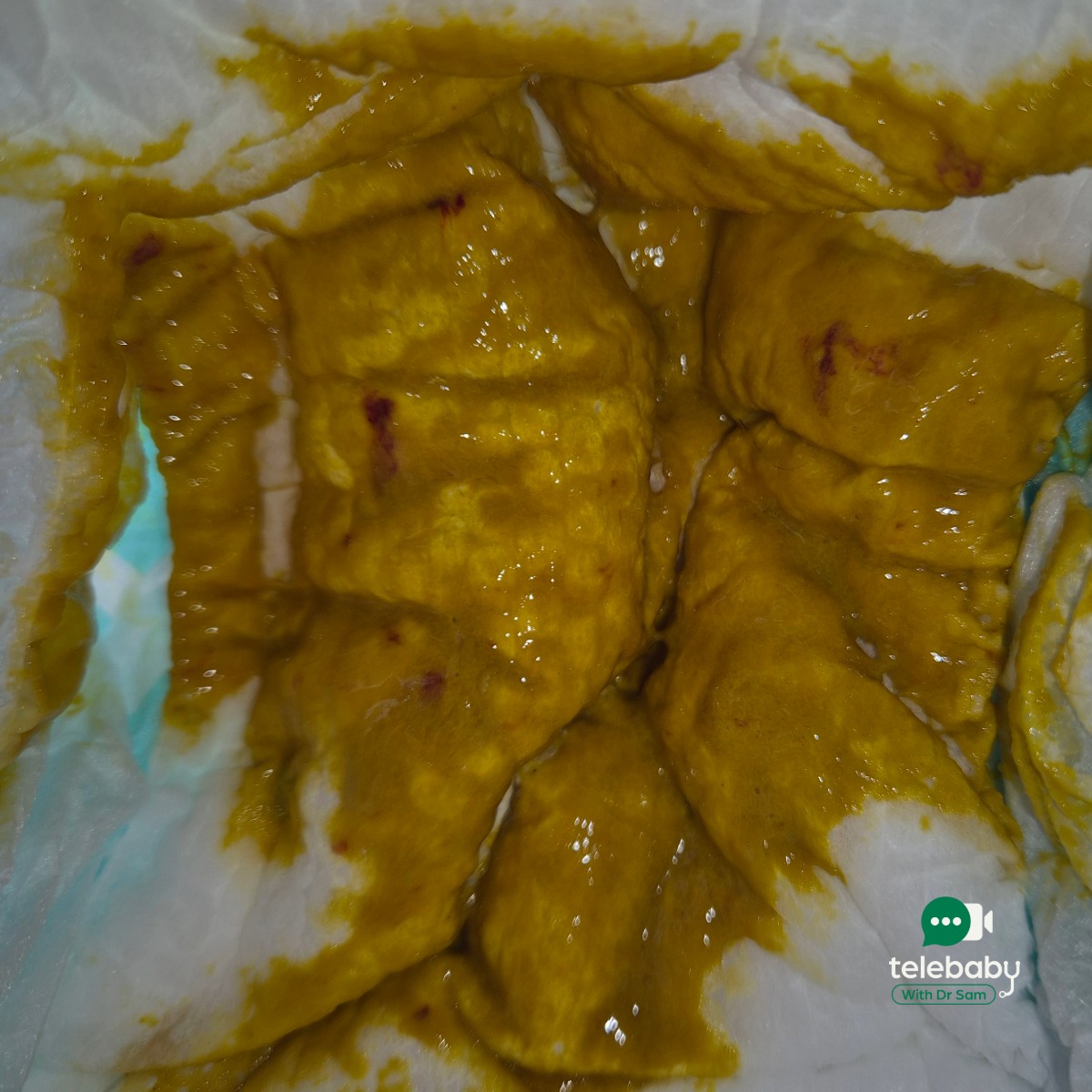

Does mucus in my baby’s poo mean an allergy?
No. Mucus alone is not enough to diagnose a food allergy.
Small amounts of mucus can occur in normal baby poo, including in healthy breastfed babies. Mucus may also appear during gastrointestinal infections or other temporary digestive changes.
Similarly, green poo or changes in stool consistency do not necessarily indicate an allergy.
If your baby is otherwise well, feeding normally and gaining weight, mucus on its own is usually not a reason to remove foods from your diet or change formula.


What else can cause blood in a baby’s poo?
Food allergy is only one possible explanation. Other causes include:
• Anal fissure: A small tear in the skin around the anus, sometimes associated with passing a hard poo.
• Severe nappy rash: Irritated or broken skin around the bottom can cause bleeding.
• Swallowed blood: For example, from a cracked or bleeding nipple during breastfeeding.
• Infections: Gastroenteritis or other bowel infections can cause blood in the poo, particularly when accompanied by diarrhoea, fever or an unwell baby.
• Less common causes: Bowel polyps, abnormal blood vessels or bleeding disorders, including vitamin K deficiency bleeding.
Some bowel conditions requiring urgent treatment can also cause blood in the poo, usually with other symptoms such as vomiting, abdominal pain, a swollen tummy or a baby who appears unwell.
This is why blood in a baby’s poo should be assessed rather than automatically attributed to a milk allergy.
How is FPIAP diagnosed?
FPIAP is diagnosed mainly through your baby’s symptoms, medical history and response to dietary changes.
Skin-prick tests and standard allergy blood tests are not useful for diagnosing FPIAP because it involves a different type of immune response from immediate food allergies.
Your doctor will consider your baby’s symptoms, feeding, growth and other possible causes of bleeding. Sometimes investigations may be needed to rule out another condition.
If FPIAP is suspected, your doctor may recommend:
1. Removing the suspected food protein from your diet or your baby’s formula for a short period, usually two to four weeks.
2. Monitoring the symptoms to see whether the bleeding improves or disappears.
3. Reintroducing the suspected food under medical guidance to see whether the symptoms return.
Reintroduction is an important part of confirming the diagnosis because bleeding can sometimes improve naturally, even without treatment.
Improvement after removing dairy or another food does not, by itself, prove that your baby has an allergy.
How is FPIAP managed in breastfed babies?
The good news is that breastfeeding can usually continue.
If cow’s milk protein is suspected, your doctor may recommend a temporary dairy-free diet while monitoring your baby’s symptoms.
This means avoiding foods containing cow’s milk protein, including milk, cheese, yoghurt, cream and other dairy products.
If symptoms improve, your doctor may recommend briefly reintroducing dairy into your diet to help confirm whether it was responsible.
If there is little or no improvement after an adequate dairy-free trial, your doctor will reassess the diagnosis. In some cases, a trial of avoiding soy or another suspected trigger may be recommended.
Avoid removing several foods at once or making repeated dietary changes without medical guidance. Unnecessary restrictions can make your diet difficult to manage and may affect your nutrition.
Looking after your nutrition while breastfeeding
If you need to avoid dairy while breastfeeding, it is important to maintain a balanced diet.
Dairy products provide important nutrients, particularly calcium, protein and certain vitamins.
Consider the following:
• Calcium: Choose calcium-fortified dairy alternatives, such as oat, almond or soy milk, provided they do not contain a food you need to avoid.
• Protein: Make sure you continue eating adequate protein from foods such as meat, fish, eggs, legumes or other suitable sources.
• Vitamins and minerals: Your intake of vitamin B2 (riboflavin), iodine and vitamin D may also need review.
• Supplements: Calcium or vitamin D supplements may be recommended depending on your dietary intake and individual needs.
A dietitian can help you maintain good nutrition, especially if you need to avoid dairy for an extended period or exclude more than one food group.
Which formula can be used for babies with FPIAP?
If your baby is formula-fed, your doctor may recommend a specialised infant formula based on the suspected allergy and the severity of symptoms.
The main options include:
• Extensively hydrolysed formula (EHF): Contains cow’s milk protein broken down into very small pieces, making it much less likely to trigger an allergic reaction. Most babies with cow’s milk protein allergy tolerate these formulas, although some still react.
• Hydrolysed rice protein infant formula (unless rice is the trigger): A nutritionally complete infant formula made from processed rice protein. It can be a suitable alternative for babies with cow’s milk protein allergy and certain other food allergies.
• Amino acid formula (AAF): Made from individual amino acids, the building blocks of protein. These formulas may be needed for babies with more severe allergies or those who do not tolerate other specialised formulas.
Some specialised infant formulas are available over the counter, while others require a prescription. Certain formulas are also available at a reduced cost through the Pharmaceutical Benefits Scheme (PBS) when specific medical criteria are met.
A paediatrician, paediatric gastroenterologist or allergist can assess your baby's eligibility and prescribe a PBS-subsidised formula when appropriate.
For more information about specific formulas available in Australia, including product names, read my Milk Allergy in Babies article here.
Does lactose-free formula help with FPIAP?
Ordinary lactose-free formula is not a treatment for cow’s milk protein allergy.
Lactose is the natural sugar found in milk, whereas FPIAP involves an immune reaction to food proteins.
Most lactose-free cow’s milk formulas still contain the milk proteins responsible for the allergy.
Goat’s milk formula, A2 formula and partially hydrolysed "HA" formulas are also not suitable treatments for cow’s milk protein allergy.
To understand the differences, read my article Lactose Intolerance vs Milk Allergy in Babies: Symptoms, Causes and Key Differences.
How long does FPIAP take to improve?
Once the correct trigger food is removed, bleeding often begins to improve within three to four days.
Some babies take up to two weeks to show a clear improvement, and mucus or other stool changes may take longer to settle completely.
If the bleeding continues, increases or is accompanied by new symptoms, your baby should be reassessed.
Continuing to eliminate more foods without medical advice can lead to unnecessary dietary restrictions and delay the diagnosis of another condition.
Will my baby outgrow FPIAP?
Yes. Most babies outgrow FPIAP during infancy.
According to the Australasian Society of Clinical Immunology and Allergy (ASCIA):
• Around 50% of affected babies have outgrown FPIAP by six months of age.
• Around 95% have outgrown it by nine months of age.
Although many babies develop tolerance early, the timing of reintroducing the trigger food depends on their symptoms and medical history.
In general, I recommend considering reintroduction after approximately six months of avoidance, often when the baby is around 9–12 months old. The timing should be individualised based on your baby's symptoms and progress.
If symptoms return, the food is usually removed again and reintroduction can be reconsidered after a few months.
Babies with more severe symptoms, or those who have also experienced immediate allergic reactions, may need a different approach and supervised reintroduction.
Can my baby still have other allergenic foods?
Yes. Having FPIAP does not mean your baby needs to avoid all common allergy-causing foods.
Unless your doctor advises otherwise, other foods such as egg, peanut, wheat and sesame should still be introduced when your baby is developmentally ready, usually around six months of age.
Australian allergy prevention guidelines recommend introducing common allergenic foods during the first year of life rather than delaying them unnecessarily.
The aim is to avoid only foods that have been identified as triggers, while maintaining a varied and nutritious diet.
How is FPIAP different from FPE and FPIES?
These are all delayed food allergies, but they affect the digestive system differently.
• FPIAP (food protein-induced allergic proctocolitis): Typically causes blood and sometimes mucus in the poo of an otherwise well, growing baby.
• FPE (food protein-induced enteropathy): Causes inflammation in the small intestine, which can lead to persistent diarrhoea, vomiting, poor nutrient absorption and poor weight gain.
• FPIES (food protein-induced enterocolitis syndrome): Typically causes repeated vomiting one to four hours after eating a trigger food. Babies may become very pale, lethargic, dehydrated or floppy. Common triggers in Australia include rice, cow’s milk, soy and oats, although almost any food can be responsible.
Unlike the usually mild presentation of FPIAP, FPIES can cause a serious reaction requiring emergency treatment.
Antihistamines and adrenaline do not treat the underlying delayed gut reactions seen in FPIAP, FPE or FPIES. However, children who also have an immediate food allergy may need different treatment and should follow their prescribed allergy action plan.
When should I seek medical help?
Contact your doctor promptly if you notice blood in your baby’s poo, even if your baby seems comfortable and is feeding normally.
Seek urgent medical assessment if your baby has:
• Significant or increasing bleeding.
• A swollen or painful tummy.
• Repeated vomiting, particularly green vomit.
• Poor feeding or noticeably fewer wet nappies.
• Unusual sleepiness, marked paleness or floppiness.
• Black, tar-like poo after the first newborn days.
• A temperature of 38°C or higher if younger than three months.
If your baby is unresponsive, severely floppy or struggling to breathe, call 000 immediately.
Final thoughts
Finding blood in your baby’s poo can be frightening, but the good news is that FPIAP is usually a mild condition that most babies outgrow during infancy.
Breastfeeding can generally continue, and formula-fed babies can be managed with an appropriate infant formula when needed.
The important steps are to identify the cause of the bleeding, avoid unnecessary dietary restrictions and have a clear plan for follow-up and reintroduction.
If you're concerned about blood in your baby's poo or a possible food allergy, you can book a video consultation with me through Telebaby. I can help assess your baby's symptoms, advise on dietary changes and determine whether further investigations or an in-person assessment are needed.
Consultations are available Australia-wide, seven days a week.
This article provides general information and does not replace an individual medical assessment.
References
• ASCIA: Food Protein-Induced Allergic Proctocolitis (FPIAP)
• Royal Children's Hospital Melbourne: Non-IgE-Mediated Food Allergy
• Allergy & Anaphylaxis Australia: FPIAP
• ASCIA Guideline: Infant Feeding for Food Allergy Prevention